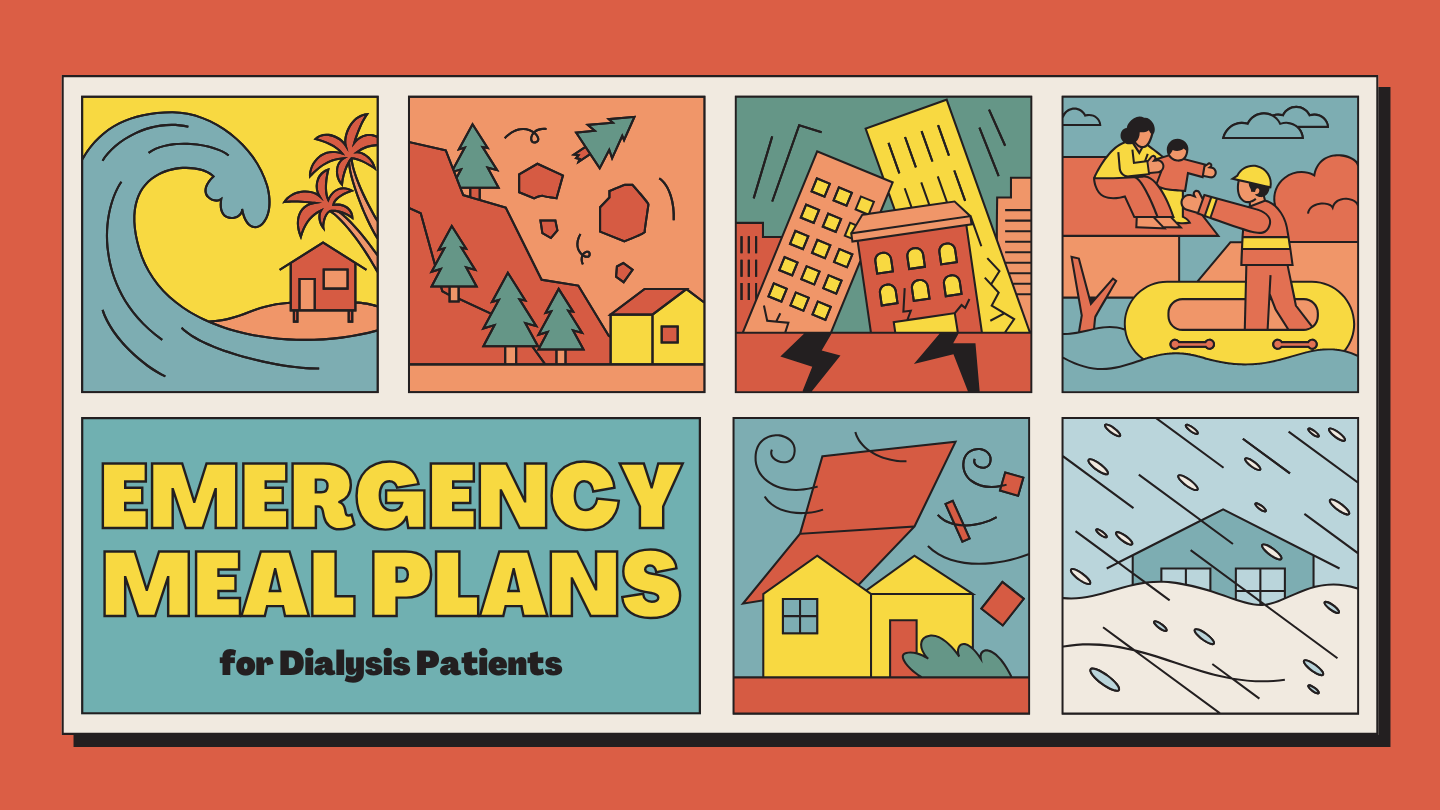
When a dialysis patient can’t get to treatment, having an emergency meal plan can help reduce health risks until dialysis is available again. In these situations, people are often advised to limit sodium, potassium, phosphorus, and fluids to stay safe.
In the clinics I’ve worked in, emergency preparedness is usually part of routine care—patients receive education before they need it. Still, I realized I hadn’t looked at the evidence behind this practice or how it’s handled around the world.
Recently, I read a great article from a Korean research group that explored how they updated emergency diets for dialysis patients. You can read the full paper here: PMC Article.
Why Might a Dialysis Patient Miss Treatment?
There are many reasons why someone might not be able to attend dialysis in an emergency situation, such as natural disasters (wildfires, earthquakes, floods) or road closures or weather-related travel disruptions.
Depending on the impact of these disasters, patients may find themselves in different types of situations:
- Evacuated from home and living in an evacuation center with limited food options
- Sheltering in place with access to utilities but unable to reach dialysis
- Sheltering in place without access to water or electricity
Regardless of the situation, if someone can’t make it to dialysis, what to eat requires careful planning to prevent life-threatening complications.
Guiding Principles for Emergency Meal Plans
The Korean authors outlined several principles for designing an emergency meal plan for dialysis patients:
| Nutrient | Rationale | Target |
|---|---|---|
| Fluids & Sodium | Most dialysis patients no longer urinate. Limiting fluids and sodium helps prevent dangerous fluid overload. | ≤ 500 mL fluids/day < 2 g sodium/day |
| Potassium | High blood potassium (hyperkalemia) can trigger cardiac arrest. Restriction is critical without dialysis. | 1000–1500 mg/day |
| Energy (kcals) | Too few calories increase muscle breakdown and worsen uremia. | 30–35 kcal/kg/day |
| Protein | Needed to maintain nutrition, but excess can worsen uremia. | Not specified |
| Phosphorus | Elevated phosphorus is not immediately life-threatening, so restrictions can be relaxed. | Not specified |
Translating Principles Into Foods
Here’s how the recommendations were applied in practice:
Salt & Sodium
- Reduce: Salty foods (kimchi, salted fish, pickles, processed foods), salty condiments, broths
- Increase: Herbs, spices, garlic, ginger, curry, vinegar, lemon juice, sugar, oils
Potassium
- Reduce: High-potassium fruits/vegetables, potassium-based salt substitutes, chocolate, nuts, coconuts, raisins
- Increase/Use: Wet cooking methods (boiling, soaking), canned fruits, chopping foods small before soaking
Energy
- Reduce: Dried fruit
- Increase: Sugar, honey, jellies (caution with diabetes), fats
Protein & Phosphorus
- Reduce: Nuts, milk, dairy, colas, instant foods
- Increase: Eggs, lean meat, fish, white rice instead of brown rice or legumes
The article also included sample three-day menus (with pictures) and substitution lists. The foods were specific to Korea, so I won’t go into it here, but check out the full article if you are interested.
How Do Other Countries Approach Emergency Diets?
United States:
The Renal Network guide (published around 2010) is frequently cited. It appears to be the first guidelines published and is the key reference used around the world. Not surprisingly, it’s recommendations align closely with those from Korean—limiting potassium, sodium, protein, and fluids.
Access the full guide here: Disaster Preparedness Guide

Australia:
In the article by Rossi, Megan, et al. “Nutrition during a natural disaster for people with end-stage kidney disease.” Renal Society of Australasia Journal 7.2 (2011): 69-71; the authors emphasized the same nutrients but continued to restrict phosphorus, unlike the Korean approach. (Though you can see that the Korean may have still been restricting phosphorus by limiting whole grains, nuts and legumes).

I tried to go to the website noted in the table, but it looks like this resource is no longer available
Are Potassium Additives Considered?
Interestingly, none of the resources I reviewed specifically addressed potassium additives in emergency meal planning.
This is concerning because many “emergency-friendly” canned foods, such as low-sodium chicken or fish, may contain potassium additives. In practice, this could unintentionally raise potassium intake—exactly what we want to avoid.

This is clearly an area in renal nutrition that deserves further attention and research.
Key Takeaways
- An emergency meal plan for dialysis patients can reduce risks when treatment is delayed.
- The main focus is on limiting fluids, sodium, and potassium while ensuring enough calories and protein.
- Global approaches differ slightly—for example, Australia restricts phosphorus while Korea recommends relaxing it.
- Potassium additives remain an overlooked issue in emergency planning and warrant further review.